Fix Red Missing Nodes After Importing a Workflow
Repair red missing nodes after importing shared ComfyUI workflows by installing custom nodes, matching model files, and resolving dependency errors.
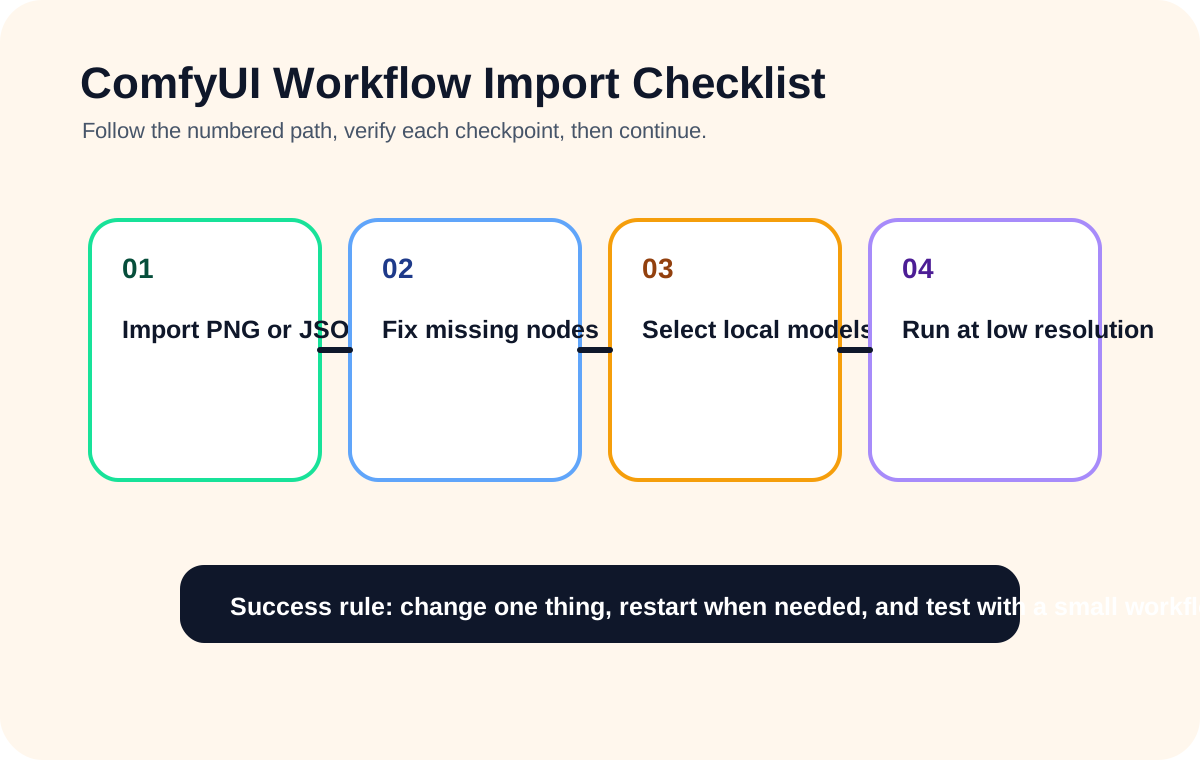
Quick answer
When an imported workflow shows red blocks, ComfyUI is telling you that the custom node class is unavailable. This is different from a missing checkpoint or LoRA file. Installing model files will not fix a missing custom node.
Recommended workflow
- 01
Red nodes mean ComfyUI does not know that node type: When an imported workflow shows red blocks, ComfyUI is telling you that the custom node class is unavailable. This is different from a missing checkpoint or LoRA file. Installing model files will not fix a missing custom node.
- 02
Install only the node packs you need: Do not install every recommended package in a panic. Large node packs can add dependencies, version conflicts, and extra startup errors. Install one pack, restart ComfyUI, then check which red nodes disappeared.
- 03
Confirm the repair after restart: Many custom nodes are discovered only during startup. A browser refresh does not always reload Python modules. Restart ComfyUI, reload the workflow, and confirm that the node shape and settings appear normally.
Full tutorial notes
Red nodes mean ComfyUI does not know that node type
When an imported workflow shows red blocks, ComfyUI is telling you that the custom node class is unavailable. This is different from a missing checkpoint or LoRA file. Installing model files will not fix a missing custom node.
Write down the node names shown in red and search for the node pack in Manager or in the workflow author’s instructions. Install the most likely package, restart, and reload the workflow.
- Red node = custom node package problem.
- Empty dropdown = model file problem.
- Traceback = dependency or version problem.
Install only the node packs you need
Do not install every recommended package in a panic. Large node packs can add dependencies, version conflicts, and extra startup errors. Install one pack, restart ComfyUI, then check which red nodes disappeared.
If a node pack installs but still fails to import, the terminal log is more important than the red block. Look for missing Python packages, incompatible versions, or platform-specific build failures.
Confirm the repair after restart
Many custom nodes are discovered only during startup. A browser refresh does not always reload Python modules. Restart ComfyUI, reload the workflow, and confirm that the node shape and settings appear normally.
Check before you run
- Import the workflow without running it immediately.
- List missing nodes and missing models separately.
- Run the first test at low resolution and batch size 1.
Common mistakes
- Clicking Queue Prompt before checking dropdowns.
- Trusting unknown workflow files without reviewing model and node requirements.
- Trying a full-size workflow before the import is clean.
Success standard
- ComfyUI restarts without a new terminal traceback.
- The workflow can be queued once without missing nodes or empty model dropdowns.
- The result can be reproduced after refreshing the browser page.
What to do next
- Increase image size only after the small test workflow is stable.
- Add one plugin or model family at a time.
- Return to the English guide library if the next error belongs to another category.
Finished this guide? Return to the main path
If this guide solved a specific issue, return to the beginner setup, model path, CUDA VRAM, or workflow import route to keep going.
Need more context?
This English guide gives the direct working path first. The paired Chinese reference can provide extra screenshots, local download notes, and longer troubleshooting branches for the same topic.